
The Real Lesson Behind Steve Jobs and Apple’s Think Different Campaign
A reflective look at Steve Jobs, Apple’s Think Different campaign, and how clarity, focus, and simplicity fueled one of the greatest business turnarounds in history.

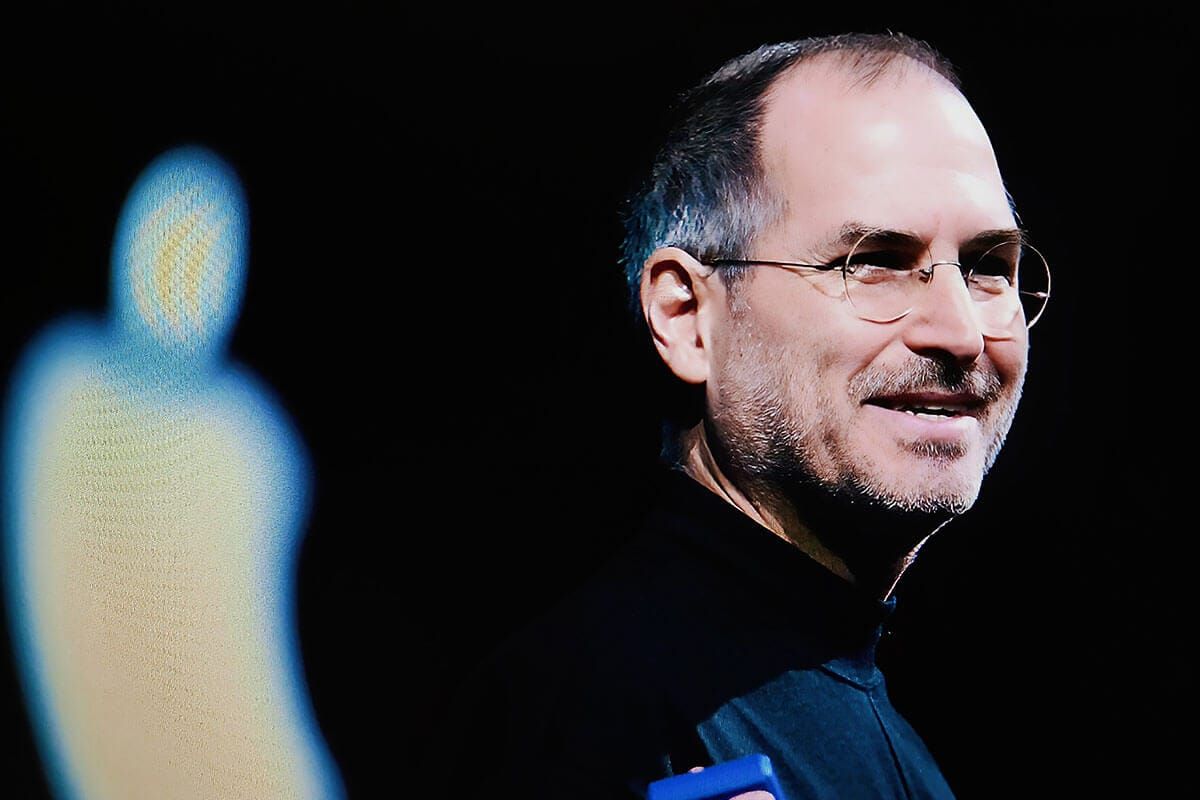
Have you ever had an opinion of someone that you have lived your whole life thinking either this person is fantastic or, on the opposite side of the spectrum, you don’t care to ever meet them, and then one event or interaction shifts your perspective? That happened to me one day about 15 years ago when I was browsing YouTube and found a video of Steve Jobs giving a commencement speech to Stanford graduates.
At first glance, I remember thinking, “Oh great, an ego-driven CEO known for his highly erratic behavior, giving his two cents on his perspective on winning… can’t wait for this. But instead, what he said was beautiful, and after watching this video, I became willing... or at least more open to learning more about Steve Jobs.
Born on February 24, 1955, in San Francisco, Jobs was adopted by Paul and Clara Jobs and raised in a modest California neighborhood. As a young boy growing up in Silicon Valley, Jobs developed an early fascination with electronics and creativity, often spending time around engineers and hobbyists who influenced his curiosity about technology and design. That blend of technical exposure, playful thinking, and creative instinct would later shape the companies he would form and run.
Connecting the Dots: Strategic Thinking
What hit me about Steve Jobs’ Stanford commencement speech was his perspective on life and on how strategic thinking can influence outcomes beyond people's control. He talked about the value of connecting the dots, which can never be done looking forward, but can honestly be understood by looking back years later, and for him, that included dropping into classes at Reed College, where he was taught calligraphy in a way that broadened his education and later influenced his design ideas.
It is a reminder that leaders often draw insight from unexpected places. Jobs didn’t rely solely on numbers or technical skills. He connected creativity, intuition, design, and human behavior in ways that shaped Apple’s future. Because of these perceptions, Jobs believed that instinct, faith, life, and purpose have meaning, and connecting the dots leads to a greater purpose.
Jobs admitted that life will sometimes “hit you in the head with a brick,” but don’t lose focus even during these difficult times. He believed people must find the work they care deeply about because great work can only come from loving the process behind it. The speech also discussed finding meaning in his life, as he asked: “If today were the last day of my life, would I want to do what I am about to do today?”
If the answer became too many “no(s)” in a row, he knew something needed to change. Jobs explains that death is a powerful tool for making decisions because it strips away fear and distraction. His message: our time is limited, so we should not waste it living someone else’s life; the best thinkers weigh multiple options and variables at once. They adapt to change and turn awareness into decisions that create a real advantage and influence.
Before and After Apple
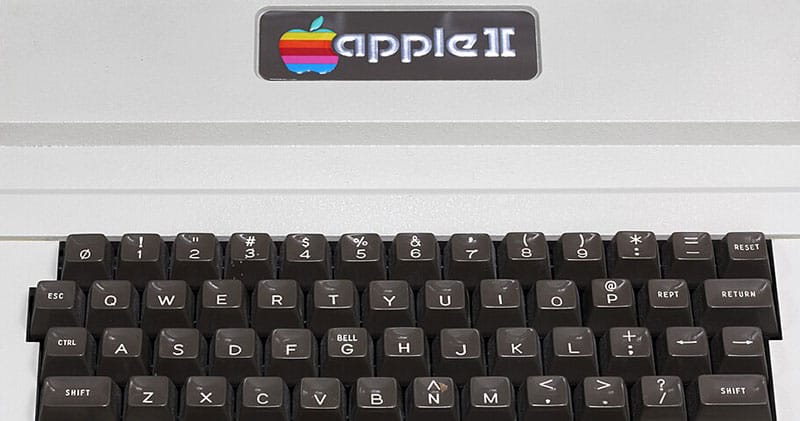
Honestly, with Steve Jobs, there were two phases: before he was fired from Apple and after he was rehired. In the years leading up to his departure, Jobs helped build Apple from a garage startup into one of the most talked-about technology companies in the world. Alongside co-founder Steve Wozniak, they launched the Apple I and, later, the Apple II in 1977, one of the first highly successful mass-produced microcomputer products that helped ignite the personal computer revolution and became a defining moment in modern entrepreneurship.
As Apple grew, Jobs became known for his intense drive, demanding standards, and obsession with design and simplicity. On January 24, 1984, Apple launched the Macintosh, the first mass-market personal computer featuring an integral graphical user interface and mouse, introducing that experience to mainstream consumers in a way that felt revolutionary. However, internal conflicts, power struggles, and disappointing sales eventually created tension between Jobs and Apple’s leadership. By 1985, after a power struggle with CEO John Sculley and Apple’s board, Jobs was forced out of the company he helped create.
Immediately after leaving Apple, Jobs founded a new computer company called NeXT. NeXT focused on building high-end workstations designed for universities, scientists, and developers. These academically driven computers were expensive and never became mainstream commercial successes, but the company was deeply innovative.
NeXT emphasized elegant hardware, advanced software development tools that helped developers build software and later expand what became Apple’s ecosystem, and a design philosophy centered on simplicity and creativity. More importantly, the NeXT operating system became incredibly influential. Years later, that technology would become the foundation for macOS, iOS, and much of Apple’s modern software ecosystem.
During this same period, Jobs also purchased a small graphics division from Lucasfilm in 1986 for about $10 million. That company eventually became Pixar. At first, Pixar struggled financially, but Jobs continued to fund the company with significant personal investment, believing in its long-term potential, as money was not his only motivation. In 1995, Pixar released Toy Story, the world’s first fully computer-animated feature film. The movie became a massive success and transformed Pixar into a powerhouse animation studio.
Perhaps most importantly, those years appeared to mature Jobs. The younger Jobs was often viewed as brilliant but impulsive, difficult, and intensely confrontational. Through NeXT and Pixar, he learned more about leadership, focus, team culture, and long-term vision. He became more disciplined in simplifying products and clearer in understanding what truly mattered.
He was a completely different person in 1997 than he was when he founded Apple Computers in 1976. Actually, what I like most about this story is that people can change, and the difference was more about his philosophy and his ability to convince a dying company to Think Different, remove distractions, and focus on simplicity, guided by core values. This is the story I want to focus on.
Simplifying Apple's Product Line
In 1997, Apple was in shambles. According to the LA Times, during that year, they lost roughly $1 billion, including a disastrous $708 million quarterly loss. The company’s stock price dropped to a 12-year low, its operating system projects were failing, Mac sales were declining, and morale within the company was awful. Things were bad, from its products to its personnel. To put it another way, Apple was a train wreck.
When Jobs returned, he quickly realized that the teams had been broken apart, but even worse, the company’s identity no longer existed. The issue wasn’t a lack of ability or product development. It was bigger. Apple had lacked clarity. The company lacked a unified direction, and Jobs knew things were in trouble and he needed to act fast to regain control of a company that had lost strategic clarity.
The Forbes article “The Real Story Behind Apple’s Think Different Campaign” describes one of the many avenues he took to shake up and refocus Apple’s direction. Let’s begin with product structure.
At that time, Apple reportedly had dozens of overlapping products, ranging from 40 to over 350 variations and configurations, depending on how they were counted. Reportedly, even employees struggled to explain the lineup clearly.
Likewise, Apple customers were facing the same issue. With confusing product line-ups and unclear product names, distinguishing between them became difficult. This scattered array of often meaningless and less-than-desirable products led to Apple’s diluted identity, making purchasing decisions cumbersome, so simplifying the lineup was necessary to influence customer decisions.
“The products sucked. There was no sex left in them.”
— Steve Jobs, reacting to Apple’s bloated product lineup during the company’s 1997 turnaround
Even with this huge number of products, Jobs felt less than enthused, famously saying, “The products sucked. There was no sex left in them.”
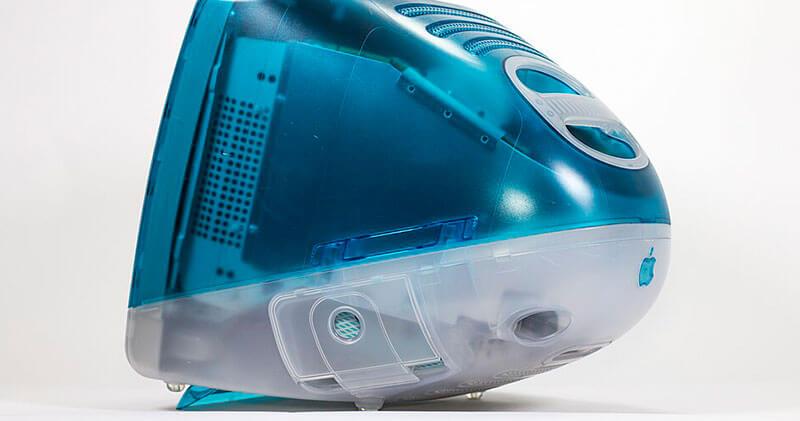
From there, Jobs introduced the 2 x 2 product matrix, meaning all of Apple’s main product lineup had to fit in these categories. Products were divided into four clear categories: consumer desktops, consumer portables, professional desktops, and professional portables.
The goal was to force Apple to build one great product in each category, eliminating clutter and confusion. Cutting overlap also reduced cost and created a clearer model for the business. This step was vital to the company’s future, but something had to be done about its culture.
Jobs knew he had some of the best engineers and designers in the tech industry, but realized that the chaotic culture led to ineffective innovation, resulting in a glut of products and, even worse, a lack of vision. His demanding perfectionism had already helped push Apple to the forefront of the technology industry, even if that same approach often created friction. In the end, that simplification helped strengthen Apple’s competitive advantage against other businesses.
Reviving Apple’s Identity
Jobs knew something had to be done and fast. He needed to re-inspire both Apple’s employees and their customers at a moment when the company specifically needed renewed leadership.
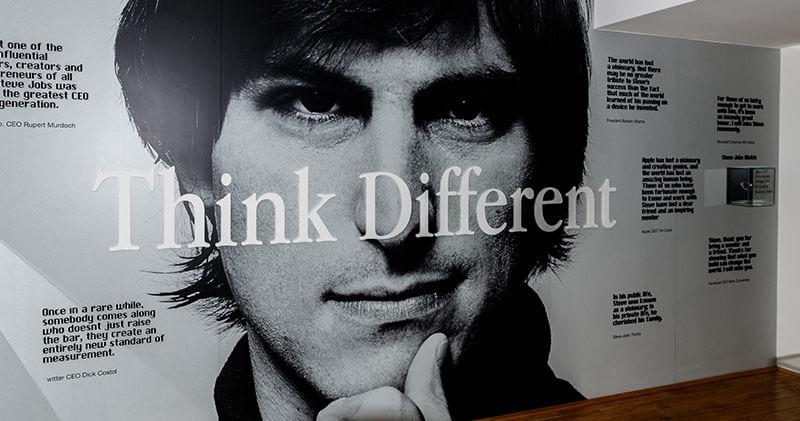
Shortly after Steve Jobs stepped back into the fold as interim CEO, the iconic “Think Different” campaign was born. Apple announced its return in a way that signaled hope both inside and outside the company.
Led by the Los Angeles-based agency TBWA\Chiat\Day in 1997, the creative heavy lifting primarily occurred across California, bridging the gap between their offices and Apple’s Cupertino headquarters. His ability to persuade and sell, often described as a reality distortion field, made that storytelling especially powerful in campaigns and keynote moments.
When the campaign finally debuted in September of that year, it did more than just sell computers; it marked a moment in Apple’s turnaround. Grounding the brand during a season of deep uncertainty helped rebuild trust in Apple's products and its future direction, laying the foundation for long-term success.
Here’s to the Crazy Ones
Instead of prioritizing tech specs or hardware, the strategy centered on individuals who defied the status quo. Icons like Albert Einstein, Martin Luther King Jr., and Muhammad Ali were presented not merely as famous faces but as representations of grit and imagination. They became symbols of what it means to lead a life of conviction, and the campaign worked as an example of brand strategy that gave employees and customers a wider perspective on what Apple stood for.
The ad campaign deepened this emotional connection. Against a backdrop of flickering black-and-white archives, a steady voice spoke a message that said, “Here’s to the crazy ones. The misfits. The rebels. The troublemakers…”
These advertisements stood in contrast to the noisy, product-obsessed marketing of the time. They weren’t about selling a device; they were about declaring a partnership with those who possessed the wherewithal to see things differently. Long before a single Mac was purchased, Apple sold a philosophy and a sense of belonging to a higher purpose, underscoring the importance of creating emotional interest beyond hardware features.
It was later reported that Jobs said the Think Different campaign was primarily meant to inspire his employees to feel inspired by their work, to be innovators, or, yes, maybe even the rebels of the company. To be a part of something great, not merely making products just to make products. All this reinforced a culture that valued new ideas over conformity.
The Turnaround and Financial Success
The rest of this story is part of the history of innovation: the internal culture underwent a radical transformation. From 1997 to 2011, during that fantastic run, Apple launched an extraordinary run of consumer hits with the iMac, iPod, iPhone, and iPad, a stretch of success that reshaped multiple industries: the iPod transformed digital music distribution through the Click Wheel, which revolutionized music navigation, the iPhone remade telecommunications, and the iPad redefined tablet computing.
Introduced in 2007, the iPhone brought pinch-to-zoom, a multi-touch display, and multimedia capabilities, and web pages feel intuitive, helping redefine modern touch devices. The App Store provided users with centralized access to third-party software built for Apple’s products. Those developers expanded Apple’s platform, and a fair playing field mattered to the services ecosystem around its devices.
More broadly, Jobs’s legacy often lay in refining existing hardware into elegant ecosystems rather than inventing entirely new technologies.
Instead of introducing the market with fragmented products, Jobs combined intuitive design with user-friendly technology to deliver standout features across categories, all centered on a few foundational concepts. Apple’s turnaround is arguably the most recognizable story in modern history. From near extinction, Apple today commands a market valuation surpassing $4 trillion and generates annual revenue exceeding $450 billion.

Apple’s Turnaround Began with Clarity
On the surface, these ideas may seem centered around business, technology, or leadership styles, but the deeper connection is really about clarity and alignment within the economic and philosophical context around leadership and innovation.
Steve Jobs operated from a foundation of core principles that extended beyond personality or raw intelligence. He understood that talent alone is never enough. People and organizations require structure, direction, and a clearly defined set of values to reach their highest potential. Jobs cultivated this clarity by stripping away the non-essential and obsessively narrowing his vision to eliminate clutter and distraction.
One of the greatest risks any organization faces is drift — the moment motion begins to masquerade as progress. Jobs encountered this firsthand at Apple, where bloated product lines, diluted messaging, and a fractured corporate identity created confusion internally and externally. Apple’s revival did not happen because the company added more. It happened because Jobs removed what no longer mattered and realigned the company around simplicity, purpose, and vision. In theory, that clarity matters because leaders cannot control every variable and must still shape outcomes.
True focus is less about output and more about internal harmony. It is the practice of silencing surrounding chaos so that values, direction, and action can move together. Whether in business, leadership, or life itself, clarity fuels momentum while fragmentation eventually leads to decay.
The same organization that was once gasping for air in 1997 now stands as a titan alongside other tech firms such as Microsoft and Nvidia. Over the next decade, we’ll see whether Apple maintains its vision under Tim Cook’s leadership, especially considering that Cook managed Apple’s day-to-day operations during Jobs’s health-related absences before becoming his successor.
Only time will tell, but it will be interesting to see whether Apple’s simplistic yet intuitive ecosystem remains at the forefront of innovation, or whether financial success will slowly soften the company’s rebellious edge, allowing hungrier competitors to reshape the marketplace.
I guess we’ll see.