
Artificial Intelligence Future: Why the Next Decade Will Transform Work and Life Unlike the Last


On Christmas Eve, while half unplugged and casually scrolling, I came across an article on Yahoo discussing the future. Specifically, what the next 10 years might look like because of AI (Yahoo News). It wasn’t written to scare people or grab attention with bold predictions. Instead, it felt calm and reflective. That tone alone made me stop and read more closely.
This isn’t an article about predicting the future or pretending we know exactly where things are headed. It’s about how to think clearly inside uncertainty — and why Perspective may be the most valuable skill AI can’t replace.
Introduction to Artificial Intelligence
Artificial intelligence (AI) is transforming the way we live and work, but what does that really mean? At its core, artificial intelligence refers to computer systems designed to perform tasks that once required human intelligence, things like learning from data, solving problems, and making decisions. Today, AI tools powered by machine learning and generative AI are rapidly becoming part of everyday business operations, from automating routine tasks to generating new content and insights.
The rise of AI models and generative AI tools is reshaping the labor market and job market in profound ways. Companies are adopting AI technology to streamline workflows, reduce labor costs, and boost productivity, primarily by automating repetitive tasks that once filled the workday. This shift brings undeniable benefits, but it also raises important questions about the future of human labor and the potential for job losses as AI development accelerates.
The impact of AI on the workforce is complex. While some roles may be replaced or redefined, the demand for new skills, especially those that complement AI, such as creative problem-solving and adaptability, is growing.
For the US workforce, staying competitive in an AI-driven economy means being a part of lifelong learning and being open to acquiring new skills that artificial intelligence can’t easily replicate. As AI technology continues to evolve, the ability to work alongside these tools rather than compete with them will be a defining factor in success in the years ahead.
Why Most “Tech Guys” Don’t Do It for Me
I’ll be honest: I’m not usually a fan of “tech guys.” Many of them come across as ego-driven or oddly detached from everyday life. The messaging often feels more like hype than substance. That said, I’ve admired a few over the years for precise reasons.
Steve Jobs for his ability to blend technology, humanity, and design. Elon Musk for execution and scale — primarily through SpaceX and Tesla. I also respect how Satya Nadella reshaped Microsoft by prioritizing learning, humility, and culture over dominance.
But right now, the tech leader I find most interesting is Sam Altman of OpenAI.
Not because he claims certainty or paints a perfect picture of the future — but because he doesn’t.
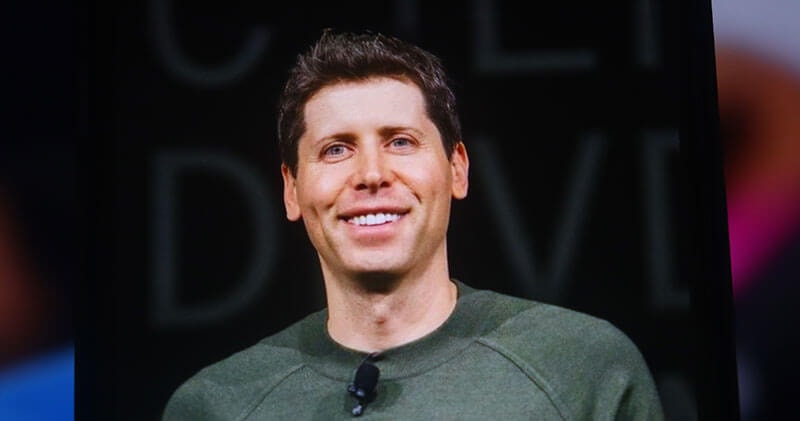
Sam Altman and an Honest View of What’s Ahead
In a recent interview published initially by Fortune and syndicated through Yahoo, Altman shared his thoughts on what the world could look like ten years from now as AI continues to accelerate (Fortune). What stood out to me wasn’t a bold claim or dramatic forecast. It was his willingness to admit discomfort.
Altman openly acknowledged in the Fortune article what many people already feel: the workforce is going to change. He pointed out that Gen Z graduates aren’t confident that the career paths they’re choosing today will guarantee a smooth launch. According to Altman, that concern is justified. Some jobs will become obsolete. Many others will be redefined beyond recognition. These trends are especially relevant to US jobs, where the labor market is evolving as automation potential and the distribution of work shifts across industries and regions.
This isn’t speculation or fear-based thinking. Research from MIT shows that AI systems are already capable of automating tasks that make up a meaningful portion of today’s jobs, particularly entry-level and routine knowledge work (MIT). Separate academic research published on arXiv suggests large language models could affect between 19% and 56% of work tasks across occupations, not necessarily eliminating jobs outright, but fundamentally reshaping how work gets done (arXiv).
AI's influence is often concentrated on specific tasks within occupations, automating or augmenting certain responsibilities rather than replacing entire jobs. So far, AI's impact on overall employment and the occupational structure has been modest, with most changes occurring at the task level rather than through widespread job displacement.
Labor Market Job Loss Is Real. But It’s Not the Whole Story
What I appreciate about Altman is that he doesn’t stop at job loss. He has Perspective.
Yes, roles will disappear or change. That part is real, and avoiding it doesn’t help anyone. But new jobs will emerge. Jobs we can barely describe today because the problems they solve don’t fully exist yet. Altman has suggested that future careers may make many of today’s jobs feel boring by comparison, especially as AI intersects with fields like space exploration, advanced engineering, and applied sciences.
There is a common perception of artificial intelligence as a job killer, but research shows the reality is more nuanced. AI and other new technologies often affect specific tasks rather than eliminating entire jobs, and can even create new opportunities or increase productivity within the labor force.
History supports this view. Every major technological shift from electricity, automation, and the internet disrupted existing work while creating entirely new industries and opportunities. Each wave of technological change has gradually reshaped the labor force and occupational structures, with workforce dynamics evolving over decades. The transition was never smooth, but the long-term result was expansion, not collapse. Technological disruption typically unfolds over decades, not months, and new technologies like AI are following a similar pattern.

Why Perspective Is the Skill That Matters Most
If you’ve read any of my writing before, you know I return to this idea often: Perspective matters.
In fact, Perspective may be the most critical skill we can develop right now. We’re living in a time when higher-level thinking isn’t just helpful. It’s essential. Problems that once took years to solve can now be tackled in weeks. AI doesn’t just make things faster; it changes how problems are approached and solved.
Perspective, in real life, might look like pausing before panicking about a career shift. It might mean realizing that learning how to think, adapt, and collaborate with AI matters more than mastering any single tool. It’s the ability to step back long enough to recognize patterns rather than react to every headline or fear-driven narrative.
Generative AI, Space, and the Acceleration of Innovation
We are currently experiencing an AI revolution, a period marked by the transformational impact of artificial intelligence on global industries and economies.
Consider what this could mean for aeronautics and space exploration, AI’s ability to process massive, complex mathematical models. Driven in large part by generative artificial intelligence, it could reignite innovation in areas that have felt stagnant for decades. In my opinion, space exploration hasn’t advanced at the pace many expected over the last twenty years.
AI may be that catalyst — enabling new propulsion models, materials breakthroughs, and engineering solutions that were previously too complex or expensive to pursue. The growing demand for specialized skills will be crucial for leveraging these AI-driven breakthroughs. What feels distant today may become practical far sooner than we expect.

Earth, the Impact of AI Is Already Visible
Here on Earth, the impact is already visible in medical science. In just five years, AI has transformed diagnostics, imaging, drug discovery, and treatment planning. Significantly, AI isn’t replacing doctors or nurses — it’s letting them do their jobs better. AI also assists with quality control by flagging errors and ensuring accuracy in clinical workflows, supporting high standards in patient care.
Studies consistently show that AI performs best when paired with human judgment, empathy, and ethical decision-making. Human skills such as creativity and conflict resolution remain essential in healthcare, complementing AI’s capabilities. When used correctly, it improves accuracy, speeds up diagnosis, and frees professionals to focus on the human side of care rather than administrative overload.
AI is particularly effective at automating manual tasks and providing administrative support, allowing staff to dedicate more time to patient care. Despite these advances, the ongoing need for human oversight of AI-driven processes in medical settings remains critical.

Key Questions for Business Leaders
For business leaders, the rapid advancement of AI technology brings both opportunity and responsibility. The big question isn’t just how to implement AI automation to drive efficiency, but how to do so in a way that supports the broader labor market and minimizes job displacement. According to the World Economic Forum, AI could displace up to 92 million jobs by 2026 — but it could also create as many as 78 million new jobs, many of which don’t exist yet.
This potential labor market disruption means business leaders must think beyond short-term gains. Supporting displaced workers is essential, whether through retraining programs, upskilling in technical areas like software development and data analysis, or having soft skills such as critical thinking and problem-solving. Investing in workforce development isn’t just good ethics. It’s good business to ensure the benefits of AI adoption are shared across the organization and the economy.
Leaders should also consider how AI-powered technologies can augment human capabilities rather than replace them. The most successful companies will be those that use AI to enhance productivity and efficiency while helping workers to focus on tasks that require creativity and specialized expertise. To take a driven approach to AI adoption. One that values both technical skills and the irreplaceable qualities of human capital, business leaders can help shape a future where new jobs and opportunities outpace the risks of job displacement.
What New Skills Can You Control in an Uncertain Future
So where does that leave us?
My advice is simple: focus on what you can control — how you think. Let AI help you become a better version of yourself, personally and professionally. If you treat AI as a tool rather than a threat, and if you practice Perspective — pausing, stepping back, recognizing patterns, and seeking insight — you’ll be far better equipped to stay agile in a world that refuses to slow down.
Honestly, all bets are off. The job I’m doing today will look very different in five years. In ten? Who knows. It may be merged, reshaped, or reallocated to meet needs that don’t yet exist.
And that’s exciting.
The future isn’t something to fear or predict. It’s something to meet with calm, curiosity, and Perspective. Thanks for reading, and more is coming on this topic.