AI and Clarity in the Age of Acceleration


I’ve been learning Python (the programming language) on the side, just for fun. Instead of going through long, multi-hour tutorials on YouTube or Udemy. I’m using AI, ChatGPT, to be specific. As a learning aid, AI can help me provide quick feedback, personalized guidance, and support as I develop new skills.
I’m enjoying it.
When I get stuck on a specific task, I type in a question. AI can help clarify the task and guide me through the next steps. Within seconds, I get a clear explanation, a working example, and often a suggestion for what to try next. It’s a remarkably effective teaching aid.
But I’ve noticed something.
Sometimes the explanation makes sense, yet I still can’t explain the concept in my own words. The solution works, but I’m not entirely sure why. And in those moments, I’m reminded of something important: While AI can help solve problems, it only truly helps if we engage deeply with the material ourselves. A belief in our own ability to learn and adapt is fundamental to making the most of AI as a learning tool.
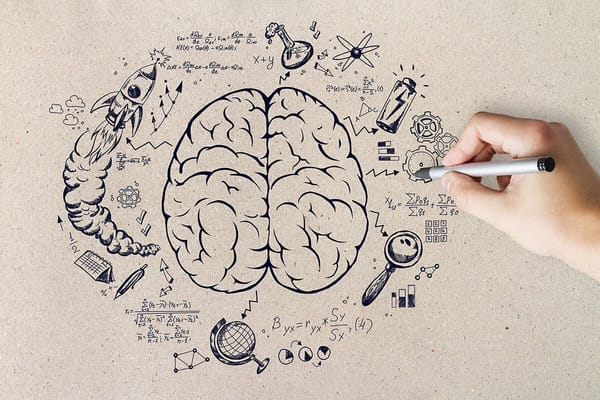
When it comes to understanding and explaining concepts, it’s the brain that processes new information, forms connections, and builds true comprehension. AI supports this process, but it cannot replace the essential cognitive work our minds do to achieve real understanding.

AI Doesn’t Create Clarity. It Reveals Whether I Have It.
If my thinking is scattered, the output will be scattered. Just faster. If my question lacks direction, the response may sound polished but still miss the mark. AI will generate options all day long. Clarity and intention are essential for making choices that shape my life.
Having the big picture in mind is critical when using AI tools. A clear path allows me to direct my mental resources and avoid being overwhelmed by endless options. That realization changed how I use the tool; clarity must be established... first, before engaging with AI.
I used to assume clarity would emerge from refining prompts or asking better questions. And while better inputs help, I’ve learned that having a clearly defined direction begins before the prompt is ever typed. Another way of saying this is multiplication without direction is just high-speed drifting.

The Role of AI in Strategy
Artificial intelligence is transforming the way organizations approach strategy development. By harnessing AI algorithms, business leaders can analyze vast amounts of data to identify patterns, predict market trends, and optimize business processes with remarkable speed and precision. This data-driven approach enables organizations to make informed decisions that drive growth.
AI’s ability to process and interpret complex information allows leaders to anticipate changes and adapt their strategies. For example, AI-powered predictive analytics can help organizations forecast demand, allocate resources more efficiently, and respond to emerging opportunities or risks.
Process automation further streamlines operations, freeing up human talent to focus on higher-level problem-solving and creative development.
However, while AI provides essential capabilities for strategy, it is not a substitute for human judgment. Successful organizations are those that balance the insights generated by AI with the experience, intuition, and yes, even ethical standards. By integrating artificial intelligence into strategic planning, businesses can achieve greater impact. Provided they remain intentional about the values and goals that guide their decisions.

AI as a Clarity Tool, Not a Critical Thinking Replacement
AI does not replace thinking. At its best, it sharpens it. At its worst, it exposes when it’s missing. The technology itself does not make decisions. It makes patterns visible faster. It surfaces connections, organizes information, and highlights possibilities, thereby supporting decision-makers by accelerating insight.
But the responsibility for judgment — for making the right decisions, for deciding what is right, what is useful, and what truly matters — remains human.
This aligns directly with something I’ve written before: clarity grows through Curiosity, Clarity, and Consistency. Curiosity drives better questions and sparks new ideas. It is the engine of creativity and the starting point of innovative problem-solving. Clarity defines what matters, narrowing the field of distraction into purposeful direction. Consistency protects attention over time, reinforcing focus so that insight can compound rather than scatter.
AI strengthens curiosity by offering immediate feedback. It allows us to test ideas quickly, explore alternatives, and refine assumptions in real time. It strengthens clarity when we already know what we’re aiming at, helping us filter noise and structure our thinking. It strengthens consistency when used intentionally, reinforcing disciplined workflows.
But it cannot originate those qualities. It does not supply purpose. It does not define values. It does not determine direction.
If I don’t know what problem I’m solving, AI will gladly generate twenty elegant answers to the wrong question. The output may look impressive. It may sound intelligent. It may even feel productive. But if the underlying thinking is unclear, the acceleration simply compounds confusion.
That is not a technology problem. That is a thinking problem.
Focusing on What Actually Matters
The best use of AI isn’t producing more work. It’s protecting attention. In leadership, this distinction matters. As production becomes easier and faster, discernment becomes more valuable. When communication is fluid, intention becomes real. When patterns surface, judgment becomes the advantage. The leaders who thrive in this environment won’t be the ones who generate the most output, but the ones who decide most clearly what deserves amplification.
This is architectural thinking. In the ARC framework, perspective comes first. Pattern recognition comes second. Insight is cultivated intentionally. AI strengthens pattern recognition by surfacing themes, connections, and inconsistencies at extraordinary speed. But it does not replace perspective, and cannot cultivate wisdom. Wisdom requires context, reflection, and moral framing. It requires the ability to pause before acting.

AI Guardrails: Refinement, Not Expansion
If we are going to use powerful tools, we need guardrails. Not rigid rules or fear-driven restrictions, but steady principles that protect our thinking as technology accelerates around us.
Clarity must come before speed. If AI helps us move faster but causes us to think less, it’s being misused. Acceleration without reflection is not progress. It's a drift.
Focus is a moral choice. What we choose to amplify — the ideas we explore, the messages we generate, the decisions we reinforce — shapes outcomes, cultures, and ultimately lives. AI can scale whatever we feed it. That makes intention critical.
Patterns require interpretation. Models can surface correlations. But wisdom decides what matters and what to do next. Insight does not emerge automatically from information; it requires discernment.
Tools should serve people. If AI begins to erode empathy, patience, responsibility, or thoughtful dialogue, something is off. Efficiency should never come at the cost of humanity.
Final Thought
We are living in an amazing age where technological acceleration should be celebrated. Faster launches, faster responses, faster production, faster learning. Speed has become the default metric of progress. But clarity is not a function of speed. It is a function of focus.
AI doesn’t create clarity. Used without intention, it amplifies noise. Used with intention, it sharpens thinking. Used with stewardship, it protects attention. The technology will continue to accelerate. The real question is whether we will deepen.
AI can help us get there if we remain human-first.